How Long Do Water Heaters Last in Sacramento?
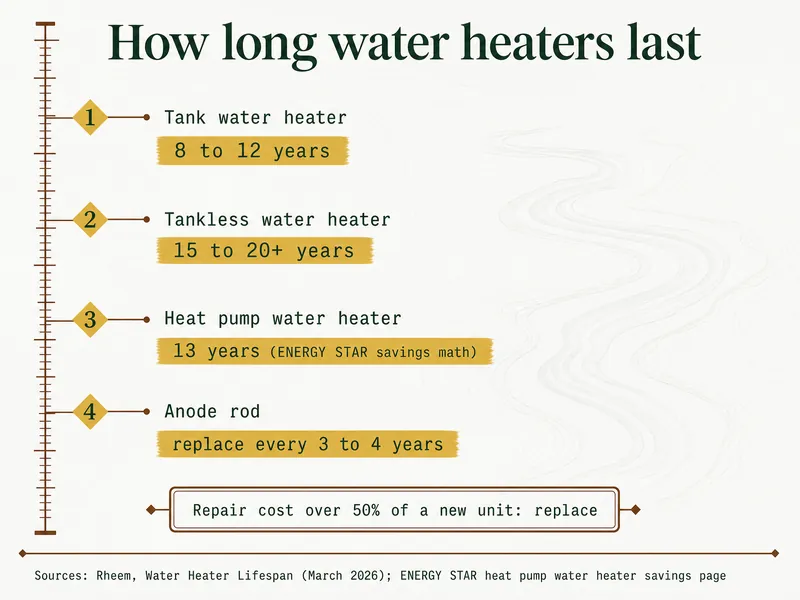
How long do water heaters last? A tank model typically lasts 8 to 12 years, Rheem says; tankless units run 15 to 20 years or more, and upkeep moves a tank within that range.
Checked against its sources by Levee Line · how figures are sourced · Last checked
Readings first
- Rheem puts traditional tank water heaters at 8–12 years and tankless units at 15–20+ years.
- ENERGY STAR's savings math for a heat pump water heater assumes a 13-year lifespan.
- The City of Sacramento's 2025 water quality report gives a system-average hardness of 83 mg/L (4.9 gpg), moderately hard on the USGS scale.
- Sacramento Suburban Water District's wells average 120 mg/L (north) and 130 mg/L (south), so tap hardness there swings with the blend.
- Rheem's rule of thumb: replace when a repair costs more than 50% of a new unit; replace the anode rod every 3–4 years.
- A. O. Smith's 2023 manual says drain and flush after the first six months, then at least yearly.
How long do water heaters last on average?
A standard tank water heater lasts about 8 to 12 years. That range comes from Rheem's March 2026 article on lifespan, which also gives tankless units 15 to 20 years or more "with proper care". Rheem's explanation is wear: a tank heats and holds water all day, while a tankless unit only fires on demand.
Where your heater lands in that range depends on three things Rheem names: water hardness, how hard the household works it, and skipped maintenance. Age is the first reading to take. The build date is usually encoded in the serial number on the rating plate; the maker's site or manual explains its own code.
Lifespan readings
- 8–12 yearsTypical life of a tank water heaterRheem
- 15–20+ yearsTypical life of a tankless water heaterRheem
- 13 yearsHeat pump water heater lifespan used in ENERGY STAR's savings tableENERGY STAR
- 83 mg/LCity of Sacramento system-average hardness, 2025 dataCity of Sacramento 2025 water quality report
Does Sacramento water hardness shorten heater life?
On most river-supplied systems in the Sacramento region, hardness is a minor factor; on groundwater-heavy systems it matters more. Hardness minerals settle out as sediment when water is heated, and A. O. Smith's manual says the amount of sediment "depends on the hardness of your tap water", the temperature setting and other variables. Water reports print hardness in ppm, which is the same as mg/L.
The City of Sacramento's 2025 water quality report (2025 data, published June 2026) gives a system average of 83 mg/L (4.9 gpg), with American River water from the Fairbairn plant at 34 mg/L (2.0 gpg) and City wells from 15 to 154 mg/L (0.9 to 9.0 gpg). On the USGS hardness scale, 61 to 120 mg/L is moderately hard and 121 to 180 is hard. El Dorado Irrigation District's 2025 report for its Main system, which serves El Dorado Hills, gives 13 mg/L (0.76 gpg), about as soft as tap water gets.
Groundwater systems sit higher. Sacramento Suburban Water District's 2025 report gives its wells an average of 120 mg/L (7.0 gpg) in the north and 130 mg/L (7.6 gpg) in the south, while the surface water it buys runs 17 to 63 mg/L, so the tap shifts through the year. California American Water's 2025 reports give its Fruitridge Vista system an average of 172 mg/L (10.1 gpg). The page on hardness by water district lists every supplier.
What are signs a water heater is failing?
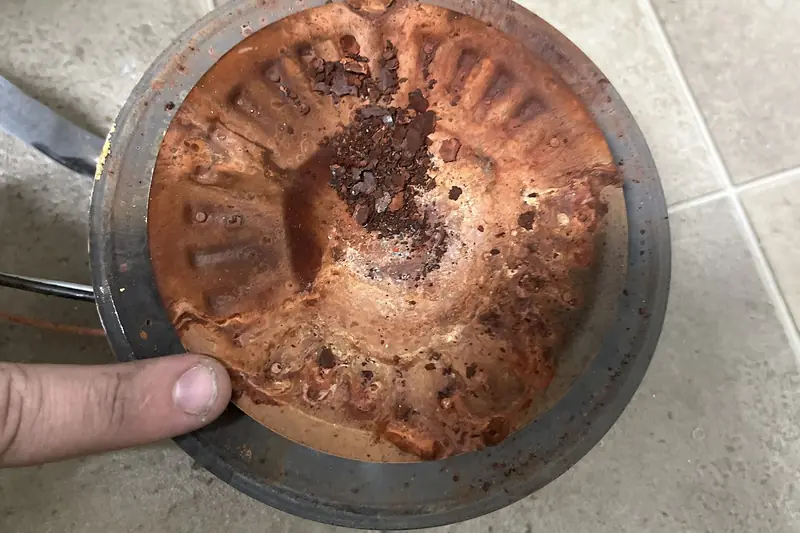
Water at the base of the tank is the clearest sign; Rheem says a leak from the tank itself usually means replacement. Its other warning signs are rusty or discolored hot water and "persistent rumbling or popping sounds" from hardened sediment on the tank floor.
Less hot water than usual can also point to sediment. A. O. Smith's troubleshooting section says a buildup of "sediment or lime" on the tank bottom can cut efficiency and that heavy deposits can damage the heater. A small hot-side plumbing leak can look the same, so check under sinks and around fittings first.
Should you repair or replace an old water heater?
Replace it when a repair would cost more than half the price of a new unit, Rheem's rule of thumb, or when repairs keep coming. Rheem also treats age as a signal on its own: a heater 10 to 15 or more years old with recurring problems is a replacement candidate, and units past 10 years are more likely to fail again soon after a fix.
Repair makes sense on a younger unit. Rheem's line is under 6 to 8 years old, no tank corrosion or structural leak, and a repair well under 50% of replacement. Elements, thermostats, anode rods and valves are made to be swapped.
If replacement is coming, plan it before the tank fails. A switch from gas to a heat pump model can qualify for a SMUD rebate of up to $4,000, but only through a SMUD network contractor with a permit; the SMUD heat pump rebate page sets out the conditions. California also requires every new or replacement heater to be strapped for earthquakes.
How long do tankless and heat pump heaters last?
Rheem gives tankless units 15 to 20 years or more, longer than a tank because they heat only on demand. Rheem lists hard water among the things that speed wear on any type, so the maker's maintenance schedule still applies.
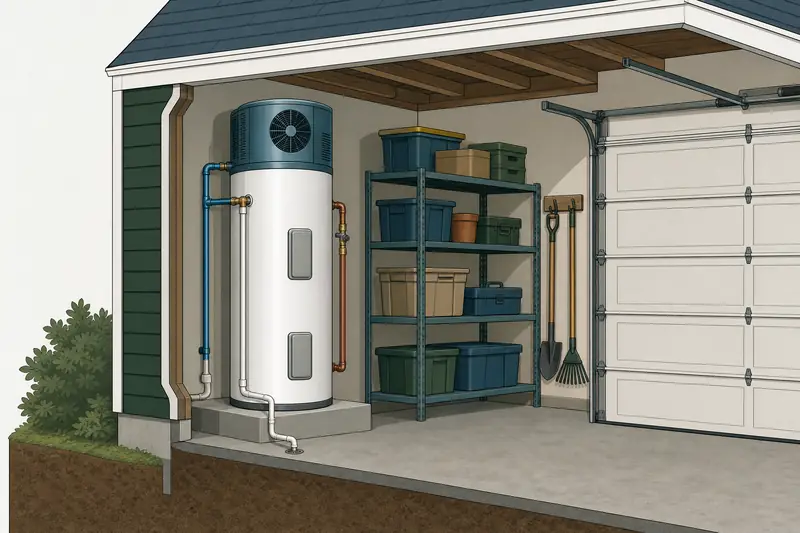
For heat pump water heaters, the only figure in the sources read for this page is ENERGY STAR's: its savings table assumes a 13-year lifespan when it estimates about $550 a year saved for a household of four, against a standard electric water heater. Heat pump models are still tanks, so the same anode and sediment care applies, plus an air filter that SMUD says needs periodic cleaning.
What extends water heater life?
Flushing, anode checks and moderate pressure are the three habits Rheem names. Its list: flush the tank yearly, replace the anode rod every 3 to 4 years, keep house pressure at about 40 to 60 psi, and look for leaks and corrosion a few times a year.
- Flush on the manual's schedule. A. O. Smith's 2023 manual says drain and flush after the first six months to see how much sediment forms, then at least yearly, more often if there is a lot. Steps are on the flushing and strapping page.
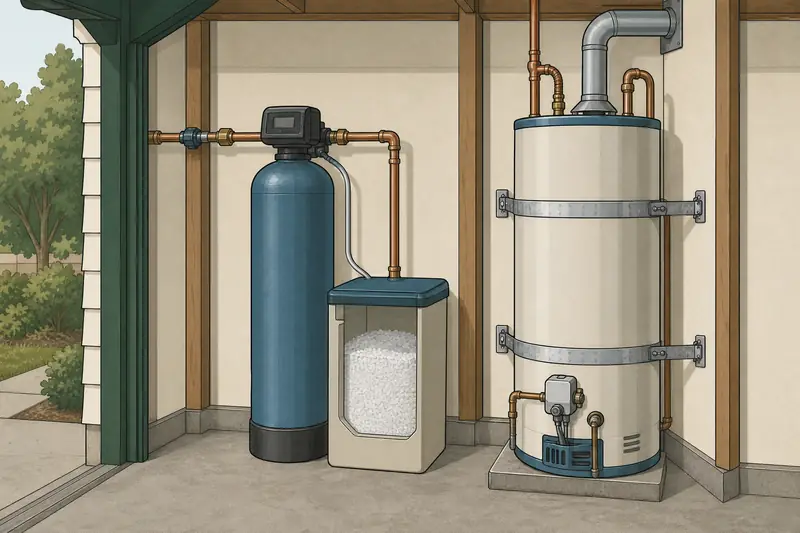
- Check the anode. The anode rod corrodes so the tank does not. The same manual says a water softener makes it deplete faster, so inspect it more often on softened water.
- Watch pressure. California's plumbing code requires a regulator where street pressure tops 80 psi; the pressure regulator page covers how to read it.
- Size a softener right if you use one. On hard groundwater, daily grains = gpg × people × about 75 gallons per person per day (an assumption). At 130 mg/L (7.6 gpg) and four people that is about 2,280 grains a day, or 16,000 a week, so a 32,000-grain unit regenerates about every 10 to 14 days at full capacity. The softener sizing page runs the numbers.
On soft river water a softener is rarely needed for the heater's sake; flushing does most of the work.
Sounding notes
This page is based on Rheem's lifespan article (March 25, 2026), A. O. Smith's gas water heater manuals 100283020 (February 2023) and 326940, ENERGY STAR's heat pump water heater savings page, SMUD's appliance rebates page, and the 2025 water quality reports of the City of Sacramento, El Dorado Irrigation District, Sacramento Suburban Water District and California American Water, all read in October 2026. Left out: repair prices, brand comparisons, warranty terms and any lifespan figure not printed by a maker or agency.
Downstream questions
Do water heaters last longer in Folsom or El Dorado Hills than in Arden?
They may sediment less. Folsom's 2025 report gives 26.5 mg/L and El Dorado Irrigation District's Main system 13 mg/L, while Cal Am's Arden system averages 118 mg/L. Hardness is one factor among several, so no supplier's water sets a heater's life on its own.
How can you tell how old a water heater is?
Read the rating plate on the side of the tank. Rheem says the manufacture date is often encoded in the serial number, and each maker publishes how to read its own code.
Is a 15-year-old water heater worth keeping?
It is past Rheem's 8 to 12 year range for tanks. If it is dry, quiet and heats well, it can keep running, but Rheem says the risk of leaks rises significantly after 10 years, so plan the replacement rather than wait for a failure.
Does softened water shorten a tank's life?
A. O. Smith's older manual says a softener "may decrease the life of the water heater tank" because the anode depletes faster. Its newer manual says to inspect the anode more often if you use a softener.
Why does my water heater pop or rumble?
Rheem ties persistent rumbling or popping to hardened sediment on the tank floor. Draining and flushing can clear loose sediment; heavy, hardened deposits may not come out.
Does a heat pump water heater need different care?
It needs the same tank care plus an air filter that SMUD says must be cleaned periodically. ENERGY STAR notes these units may need annual maintenance, including filter changes, per the maker's instructions.
Is a leaking relief valve a sign the tank is failing?
Not always. A. O. Smith's older manual says thermal expansion can make the relief valve open now and then, and its newer manual calls for an expansion tank on a closed system; a leak from the tank body is the failure sign.
Further down the channel
Back upstream: every Sacramento-region tap water reading