Folder · 4 pages
Sacramento Water Lines, Pressure and Laterals
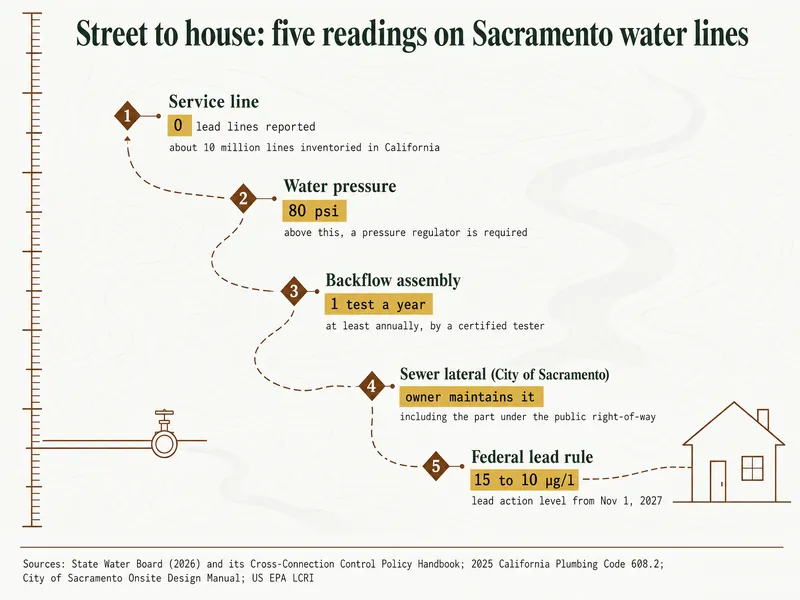
Sacramento water lines run from a supplier's main to your meter and on to the house, and the readings that matter are short: no lead lines reported, 80 psi maximum, a yearly backflow test, and an owner-maintained sewer lateral.
Checked against its sources by Levee Line · how figures are sourced · Last checked
Readings first
- California's service line inventories cover nearly 10 million lines and report no lead lines; about 12,000 are galvanized lines requiring replacement (State Water Board, updated August 1, 2026).
- The 2025 California Plumbing Code (section 608.2) requires a pressure regulator once static pressure tops 80 psi (IAPMO).
- Backflow assemblies must be tested at least annually by a certified tester under the State Water Board's handbook, in force since July 1, 2024.
- Inside the City of Sacramento, the owner maintains the entire sewer lateral, even the part under the street.
- In SacSewer areas, SacSewer maintains the lower lateral and main and the owner keeps the upper lateral (Sacramento County 311).
- Freezing nights are few: 15.4 per year at the Executive Airport station in NOAA's 1991–2020 normals, so exposed pipes are the main cold-weather risk.
Street-to-house readings
- 0Lead service lines reported in California inventoriesState Water Board
- 80 psiStatic pressure above which a regulator is required2025 California Plumbing Code 608.2
- 1 a yearMinimum backflow assembly test frequencyState Water Board handbook
- 10 µg/LFederal lead action level under the LCRI, down from 15US EPA
- 15.4Nights a year at or below 32°F, Sacramento Executive AirportNOAA NCEI 1991–2020 normals
Are there lead water lines in Sacramento?
No Sacramento-area supplier reports a lead service line. The City of Sacramento says its 2024 inventory turned up neither lead lines nor galvanized lines that need replacing (City lead FAQ), and Sacramento Suburban, San Juan and Golden State Water's Cordova system say the same. Unknowns remain in a few places: Rio Linda/Elverta's 2024 file lists 3,373 of its 4,690 lines as unknown, West Sacramento wrote to about 8,000 households with unknown lines in December 2025, and Sacramento County Water Agency expects to finish identifying its unknowns by 2028.
Reports print lead in ppb, which equals µg/L; mg/L is ppm and PFAS figures use ppt. The supplier-by-supplier table, the definition of a galvanized line requiring replacement and a four-step pipe check are on the service line inventory page. Lead from faucets and solder inside the house is a separate matter, on lead in tap water.
What pressure should Sacramento water lines run at?
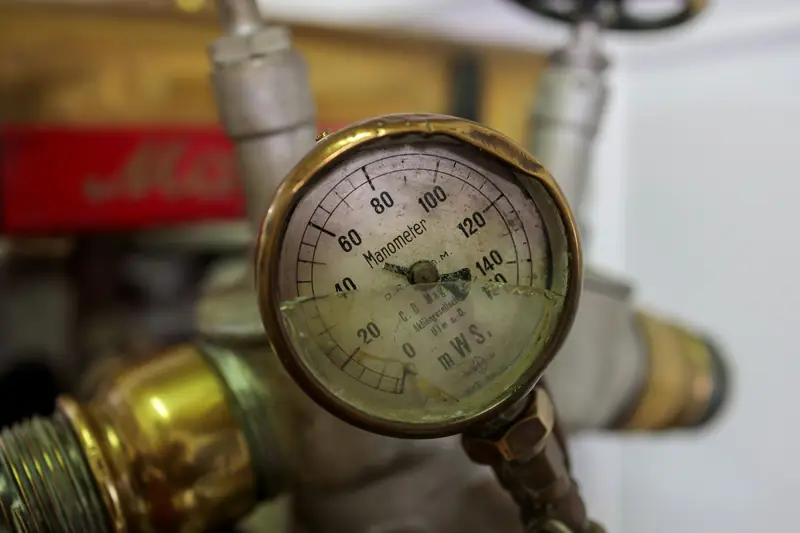
House pressure should sit at or below 80 psi static, the ceiling in California Plumbing Code 608.2. A. O. Smith's gas water heater manual recommends 50 to 60 psi, City of Sacramento standards call for a 30 psi floor at each service connection during peak hour, and Sacramento County runs distribution mains between 35 and 90 psi.
That 90 psi top end is why some homes need a regulator and others do not. A gauge on a hose bib with all water off gives the static reading, and an expansion tank keeps a closed system from creeping past 80 psi when the heater runs. The test steps and failure signs are on water pressure regulators.
Who owns the sewer lateral?
It depends on the sewer agency, not the water supplier. The City of Sacramento's Onsite Design Manual (rev. September 1, 2026) makes the owner responsible for the private sewer line "including the portion ... within the public right-of-way". SacSewer, which serves about 1.2 million people across unincorporated Sacramento County, Citrus Heights, Rancho Cordova, Elk Grove and parts of Folsom and Sacramento, maintains the lower lateral and main.
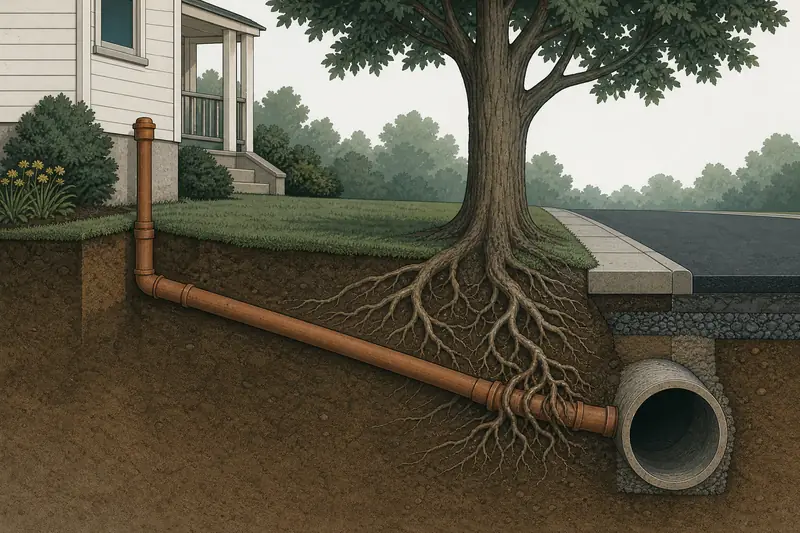
Tree roots are the usual trouble on older laterals, because they follow moisture leaking from cracked joints. Ownership splits, cleanout placement and warning signs are on sewer laterals and tree roots.
Which homes need a backflow test?
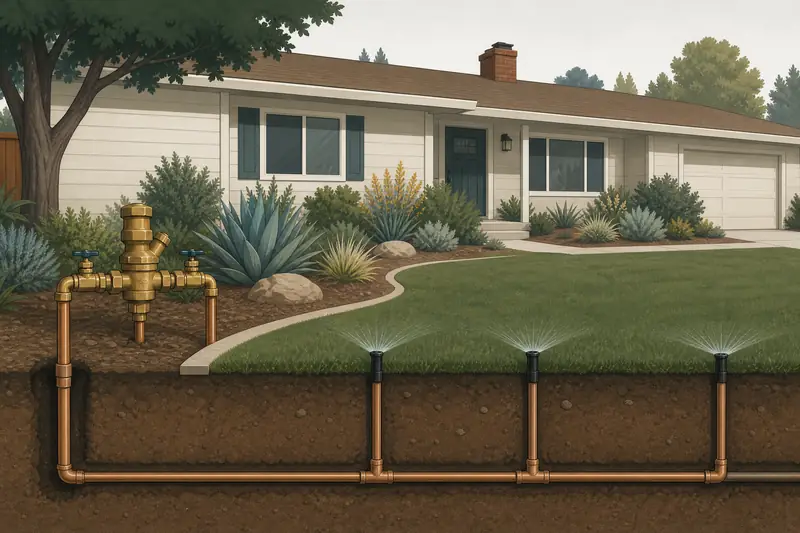
Homes with a supplier-required backflow assembly need one test a year; most single-meter houses have no such assembly. The City of Sacramento requires an assembly on every dedicated irrigation service, Sacramento County's Environmental Management Department tracks external assemblies on fire, irrigation and commercial lines, and the State Water Board handbook treats a property with its own well tied into the plumbing as high hazard.
A failed assembly has 30 days to be repaired or replaced, and a supplier must have authority to act, up to shutting off service, when tests are ignored. Assembly types and tester rules are on backflow testing.
What fails first in older Sacramento lines?
No Sacramento agency publishes failure counts, but the documents point to the parts that move or leak. The City of Sacramento calls backflow assemblies "mechanical devices that have moving parts that can wear out and fail", A. O. Smith ties pressure above code limits to heater leaks and worn toilet valves, and roots work into sewer laterals at joints that already seep.
Cold is a smaller factor here than in most of the country. NOAA's 1991–2020 normals count roughly 15.4 freezing nights per year at the Executive Airport station and zero nights down to 20°F, so the risk sits with pipes in attics, garages and on outside walls. Water heaters, often the first appliance to show high-pressure damage, have their own section at how long water heaters last, and the home page maps every supplier in the region.
Sounding notes
Based on the State Water Board's statewide inventory figures (August 2026 update) and Cross-Connection Control Policy Handbook (revised April 2026); the 2025 California Plumbing Code section 608; EPA's Lead and Copper Rule Improvements pages; City of Sacramento lead FAQ, cross-connection page, Section 13 and Onsite Design Manual; Sacramento County 311 and EMD pages; A. O. Smith manual 100283020; and NOAA NCEI 1991–2020 normals, all read October 2026. Each figure here matches the page in this folder that covers it. Left out: repair prices, supplier street-pressure figures (none are published), SacSewer's own diagram and loan details (its site could not be opened), and Elk Grove Water District's inventory, which could not be read.
Downstream questions
Which part of the water line does a Sacramento homeowner own?
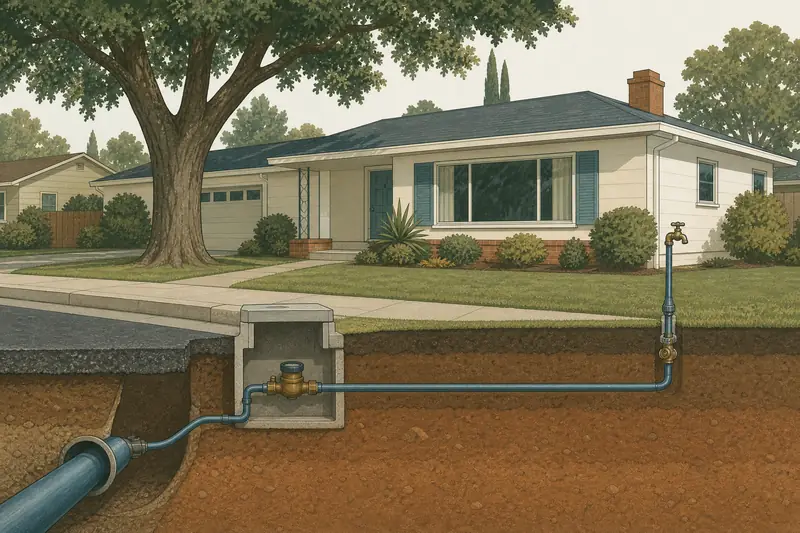
In most systems the supplier owns the pipe from the main to the meter and the owner owns the pipe from the meter to the house, as the State Water Board describes. The City of Sacramento's point of service is at the curb or, without a planting strip, the sidewalk edge.
Is my water supplier also my sewer agency?
Not always. The City of Sacramento runs sewers in part of the city, while SacSewer serves unincorporated Sacramento County, Citrus Heights, Rancho Cordova, Elk Grove and parts of Folsom and Sacramento. Your bill or county 311 can tell you which applies.
Do Sacramento suppliers publish house water pressure?
No supplier report read for this site prints a house-level figure. Design standards give a range instead: at least 30 psi at City service connections and 35 to 90 psi in County mains.
Do pipes freeze in Sacramento?
Rarely for long. The 1991–2020 normals for the Executive Airport station show roughly 15.4 freezing nights per year and none colder than 20°F. Pipes in attics, garages and outside walls are the exposed ones.
What changes for Sacramento water lines in 2027?
EPA's Lead and Copper Rule Improvements take effect November 1, 2027, lowering the lead action level from 15 to 10 µg/L and starting a 10-year clock to replace lead and galvanized lines requiring replacement. California has about 12,000 of the latter and no reported lead lines.
Who tests backflow assemblies in Sacramento County?
Certified backflow prevention assembly testers, whose results go to the water supplier. The City of Sacramento and Sacramento County EMD each publish lists of certified testers.
Back upstream: the Levee Line home page with all six folders