Lead in Sacramento Tap Water
Lead in Sacramento tap water is rare at the supplier's end: California's inventories of nearly 10 million service lines reported no lead lines, so older faucets, brass fittings and solder inside the house are the place to look.
Checked against its sources by Levee Line · how figures are sourced · Last checked
Ownership note: Levee Line shares its owners with SoftPro Water Systems and Quality Water Treatment, the two stores this page links to. Figures on this page come from Sacramento-area suppliers' own 2025 water quality reports, California and federal rules and certifiers' listings, read in October 2026. Anything a store says about its own product is reported as the store's claim. How store links work here
Readings first
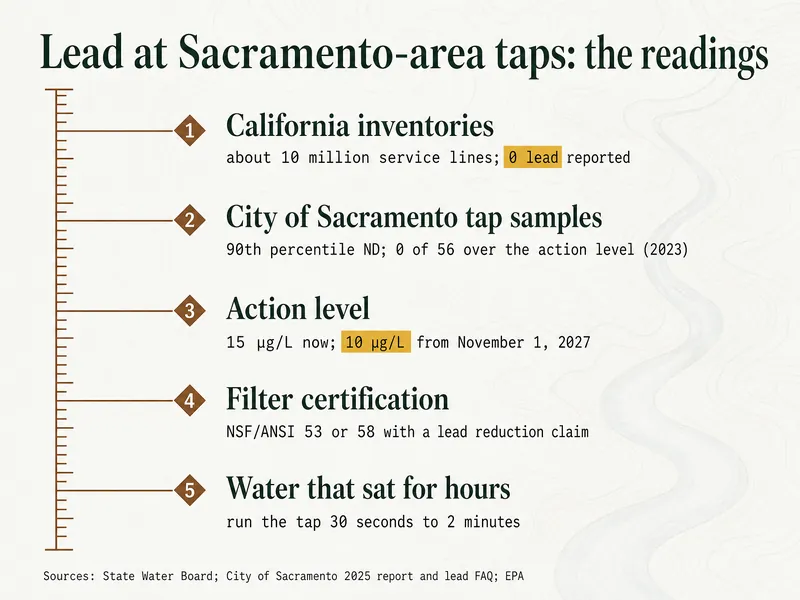
- The State Water Board says that of nearly 10 million service lines inventoried statewide, "no lead lines have been reported"; about 12,000 galvanized lines still need replacing.
- The City of Sacramento's last lead round (2023) found a 90th percentile of non-detect, with 0 of 56 homes over the action level.
- El Dorado Irrigation District's Main system had 3 of 55 homes above the action level in 2023, while its 90th percentile stayed non-detect.
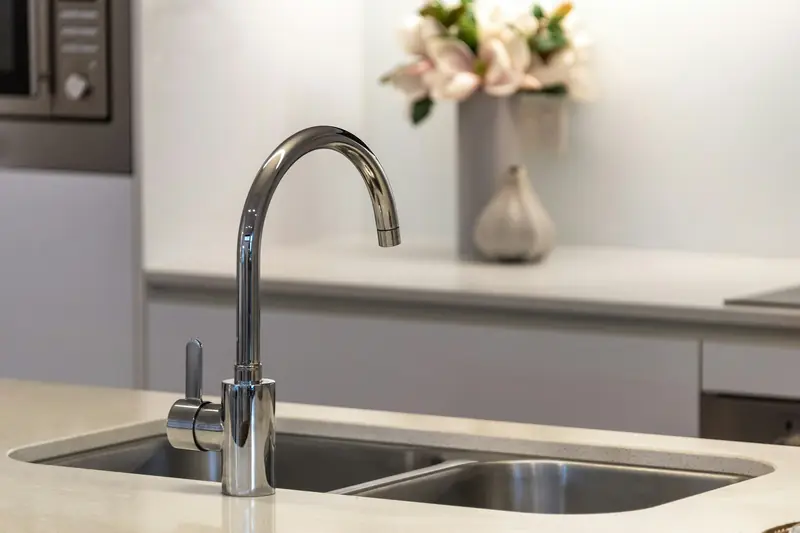
- EPA names brass or chrome-plated brass faucets and lead solder as the most common problem in homes without lead service lines.
- Boiling does not remove lead, per EPA.
- From November 1, 2027 the federal lead action level drops from 15 to 10 µg/L under the Lead and Copper Rule Improvements.
Where does lead in Sacramento tap water come from?
Mostly from inside the house, not the street. EPA says lead enters water when plumbing that contains it corrodes, and that "among homes without lead service lines, the most common problem is with brass or chrome-plated brass faucets and plumbing with lead solder." California banned lead in new plumbing on January 1, 1986, the date the State Water Board uses to classify newer lines as non-lead.
That makes the age of your fixtures the key question. A 1970s house with original copper and soldered joints, or an old brass hose bib or faucet, carries more risk than a 1990s house. Federal "lead-free" rules tightened again in 2011 to a weighted average of 0.25% lead on wetted surfaces, per EPA, so even faucets bought before then differ from new ones.
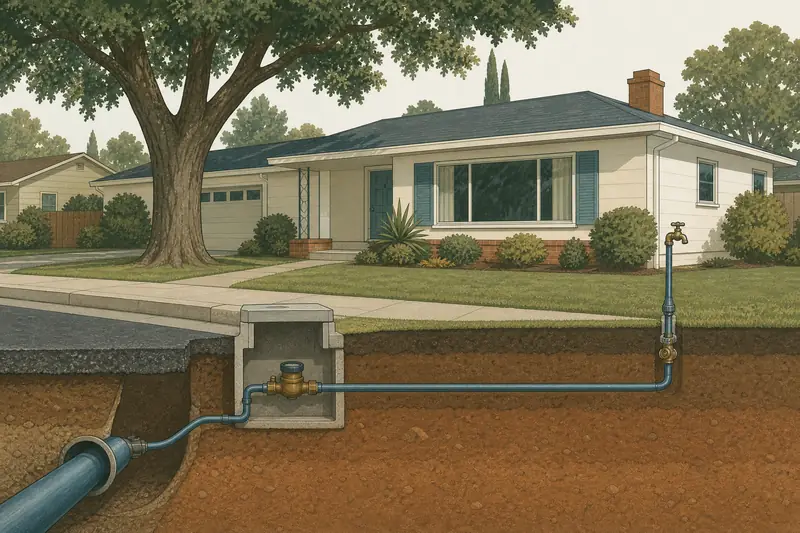
The street side has been inventoried. The City of Sacramento says its systemwide inventory found "no lead service lines or galvanized service lines requiring replacement", and its lead FAQ links a lookup map. Line-by-line status for other suppliers is on service line inventories.
What did Sacramento suppliers' lead tests find?
Every supplier read for this site passed the federal test, which is based on the 90th percentile of homes sampled, though a few individual homes came in above 15 µg/L. Reports print lead in ppb (µg/L); copper and minerals in ppm (mg/L), and PFAS in ppt.
The individual exceedances are worth reading closely. El Dorado Irrigation District's Main system reported 3 of 55 homes above the action level in 2023, with a range up to 50 µg/L, in its 2025 report. San Juan Water District reported 1 of 31 (2024). California American Water's Suburban-Rosemont and Lincoln Oaks systems each had 1 home above in 2025, and Fruitridge Vista 2 in 2024. Each of those systems still met the 90th-percentile test, which is exactly why a single home's result can differ from the system's.
Service-line status varies more than test results. Sacramento Suburban inventoried 46,571 lines and found no lead. Rio Linda/Elverta's 2024 spreadsheet still has 3,373 lines unknown out of 4,690, with none lead. West Sacramento wrote to about 8,000 residents with unknown lines in December 2025, and the county water agency notified owners of unknown lines in April 2026 and aims to identify them by 2028 (SCWA Lead Assessment Program).
How do you test your own tap for lead?
Use a lab certified by California's Environmental Laboratory Accreditation Program; the City of Sacramento's lead FAQ recommends exactly that, and the State Water Board keeps the list of certified labs. Ask the lab for its first-draw sampling instructions: the sample usually comes from a kitchen cold tap that has sat unused for several hours.
Until results come back, the City's advice applies to any address: after water has sat for hours, run the tap "for 30 seconds to 2 minutes" before drinking or cooking, and avoid drinking from the hot tap, "where lead, if present, is more likely." EPA adds a practical step: clean the faucet aerator, where lead particles can collect.
If a result comes back above 10 µg/L, the next steps are plumbing ones. A licensed plumber can find older brass valves, faucets and soldered joints; your supplier can say whether its inventory lists your service line as unknown.
Lead readings and rules
- 0Lead service lines reported in California inventories of nearly 10 million linesState Water Board
- 0 of 56City of Sacramento homes over the lead action level, 2023 samplingCity of Sacramento 2025 CCR
- 3 of 55EID Main system homes above the action level, 2023El Dorado Irrigation District
- 10 µg/LFederal lead action level from November 1, 2027U.S. EPA
Which filters are certified to reduce lead?
Ones certified to NSF/ANSI 53 (filters) or NSF/ANSI 58 (reverse osmosis) with lead named on the listing. EPA's consumer tool for lead filters says to look for a certifier's mark plus a statement of testing to NSF/ANSI 53 with a lead reduction claim, ideally alongside an NSF/ANSI 42 claim for Class 1 particulate reduction, and points to the five certifiers' online directories.
Pitchers, faucet-mounted filters and refrigerator cartridges can all carry that listing. Of the products sold through the two stores linked from this site, one does: SoftPro's Waterdrop G3P600 (sold by SoftPro Water Systems, which shares Levee Line's owners), an under-sink reverse osmosis unit at $429 (the store's listed price in October 2026), whose IAPMO R&T listing under NSF/ANSI 58, file WC-13976, names lead among six reduction claims (the others: TDS, fluoride, cadmium, barium and radium 226/228). Its look-alike, the Waterdrop G3-W, is not certified for lead, and neither store's softeners, whole-house carbon filters or UV units hold a lead listing.
A certified unit covers the one tap it serves. Use it for drinking and cooking water, change cartridges on schedule, and see reverse osmosis in Sacramento for running costs.
Does boiling or softening remove lead?
No to both. EPA's lead page says it plainly: "boiling water does not remove lead from water"; boiling only concentrates what is there as water evaporates. Use cold water for drinking, cooking and baby formula.
A water softener is a hardness device. It holds no lead certification, and EPA WaterSense's November 2024 treatment-selection booklet lists "remove lead" as its own goal, met only by a unit certified for that contaminant. Whether you need a softener at all is a separate question, covered on do you need a water softener.
What changes in 2027?
The Lead and Copper Rule Improvements take effect on November 1, 2027. EPA's final rule lowers the action level "from 15 µg/L to 10 µg/L" and requires systems to replace lead and galvanized-requiring-replacement lines within 10 years after that date. In California, the State Water Board says the roughly 12,000 galvanized lines will be replaced "over the decade following" the compliance date.
For a Sacramento-area home, the practical effect is more follow-up on unknown lines and a lower lead level that triggers action by your supplier. Your supplier's next annual report will show results against the new number.
Sounding notes
This page uses the State Water Board's service line inventory summary (data updated August 2026); EPA's lead in drinking water page, its June 2024 consumer tool for lead-certified filters and its Lead and Copper Rule Improvements pages; the City of Sacramento's lead FAQ and 2025 report; and the latest reports or inventory pages of Roseville, SCWA, El Dorado Irrigation District, San Juan Water District, California American Water, Sacramento Suburban, Rio Linda/Elverta and West Sacramento. All were read in October 2026. Certification for the G3P600 comes from IAPMO R&T file WC-13976. Left out: health-effect statements beyond EPA's own wording, and any lead claim for products without a certifier listing.
Downstream questions
Is there lead in City of Sacramento water?
The City's 2023 tap sampling found a 90th percentile of non-detect, with 0 of 56 homes over the action level, and its inventory found no lead service lines. Lead can still come from older fixtures inside a house, which only a home test shows.
Are homes built before 1986 at higher risk?
California's lead ban took effect January 1, 1986, so older homes are more likely to have lead solder or older brass parts. A first-draw lab test from the kitchen tap answers it for your house.
Does my supplier test my home for lead?
Not on request in most cases; the City of Sacramento says it tests only within its required monitoring program. Use a state-certified lab for your own sample.
Is a lead test kit from a hardware store good enough?
For a number you can act on, a lab certified by California's ELAP program is the reliable route.
Can a pitcher filter reduce lead?
Yes, if it is certified to NSF/ANSI 53 with a lead claim; EPA's consumer tool shows what the packaging and performance data sheet should say.
What does galvanized requiring replacement mean?
It is a galvanized service line that is, or may once have been, downstream of a lead line. California's inventories found about 12,000 of them statewide.
Should I worry about lead in a school's water?
The City of Sacramento says it tested more than 530 samples from 112 schools by the end of 2017 under a state program. Ask the school district for its results.
Further down the channel

Back upstream: the Levee Line home page with all six folders