Well Water Treatment in the Sacramento Valley
Well water treatment starts with a lab report, not a purchase: California's well-owner booklet says to test for coliform bacteria, nitrate and electrical conductivity every year, then treat only what the results show.
Checked against its sources by Levee Line · how figures are sourced · Last checked
Ownership note: Levee Line shares its owners with SoftPro Water Systems and Quality Water Treatment, the two stores this page links to. Figures on this page come from Sacramento-area suppliers' own 2025 water quality reports, California and federal rules and certifiers' listings, read in October 2026. Anything a store says about its own product is reported as the store's claim. How store links work here
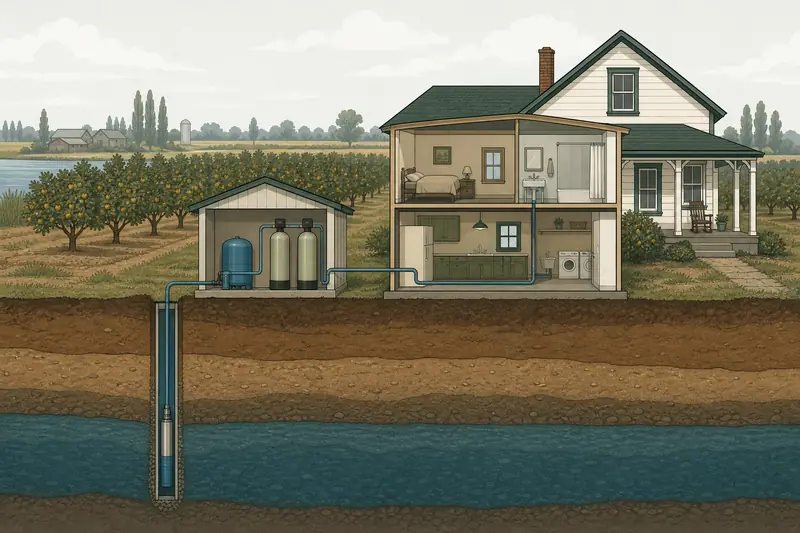
Readings first
- On a private well, testing and treatment fall to the owner: the State Water Board's domestic well testing page recommends a yearly test and puts basic sampling at $100 to $400.
- Yearly tests for coliform, nitrate and conductivity cost about $30–70, $25–60 and $10–40 each, per the State Water Board's June 2025 booklet for well owners.
- Iron above 0.3 mg/L and manganese above 0.05 mg/L stain fixtures and laundry; they are aesthetic limits, per Penn State Extension.
- A softener handles hardness and some dissolved iron, but Penn State warns oxidized iron "will foul the softener resin".
- UV is "often the last device in the treatment train" and its lamp needs replacing about every 9,000 hours of use, per University of Georgia Extension.
- Nitrate's limit is 10 mg/L as N; ordinary filters do not remove it.
What well water treatment comes first?
A certified lab test, because every later choice depends on it. The State Water Board's booklet for domestic well owners recommends testing "for total coliform bacteria, nitrate, and electrical conductivity annually" and minerals, including arsenic, every 5 to 10 years or after significant changes. Find a lab on the State Water Board's certified laboratory list.
Ask for a mineral package with iron, manganese, hardness, pH and arsenic on the first round; the booklet prices that package at $200 to $350. Reports and lab sheets give results in mg/L (ppm) or µg/L (ppb), and a few compounds in ng/L (ppt). Sampling steps and county rules are on private well testing in Sacramento County; Sacramento County's Environmental Management Department permits well construction and repair under its well program.
Public wells nearby hint at what the aquifer holds. Rio Linda/Elverta, which runs on 12 wells, reports arsenic from 3.4 to 10 µg/L and hexavalent chromium averaging 10.6 µg/L; Carmichael's wells show manganese up to 0.085 mg/L. A private well can read differently, which is why the test comes first.
What the tests and limits say
- $100–400Typical cost of basic well-water sampling at a certified labState Water Board GAMA
- 0.3 mg/LIron level above which staining and taste problems startPenn State Extension
- 10 mg/LNitrate limit, measured as nitrogenU.S. EPA
- 9,000 hrTypical UV lamp life, about one year of continuous useUniversity of Georgia Extension
How do you treat iron and manganese?
Match the method to the amount and form, which only the lab report shows. Penn State Extension says both are aesthetic problems, with recommended limits of 0.3 mg/L for iron and 0.05 mg/L for manganese, and that they must be removed from all water entering the home because they stain everything.
Its rules of thumb: a softener can take out dissolved iron below about 5 mg/L when pH is above 6.7; oxidizing filters (manganese greensand or birm) suit combined iron and manganese of about 3 to 10 mg/L; above 10 mg/L, oxidize first and then filter. Birm needs dissolved oxygen and a pH of at least 6.8 for iron.
Air-injection units belong to the oxidizing-filter family. SoftPro lists the Iron Master (sold by SoftPro Water Systems, which shares Levee Line's owners) and Quality Water Treatment the same Iron Master in a 1.5 cubic foot size (sold by Quality Water Treatment, which shares Levee Line's owners), both at $1,517–$1,897 (each store's listed price in October 2026). The stores describe them as using air injection for iron, manganese and hydrogen sulfide, sized by pump gallons per minute, and claim they handle "up to 30 ppm of iron"; that figure is the store's claim, not a certifier's. A rotten-egg smell is hydrogen sulfide, which the state booklet lists as treatable by oxidation, carbon or shock chlorination.
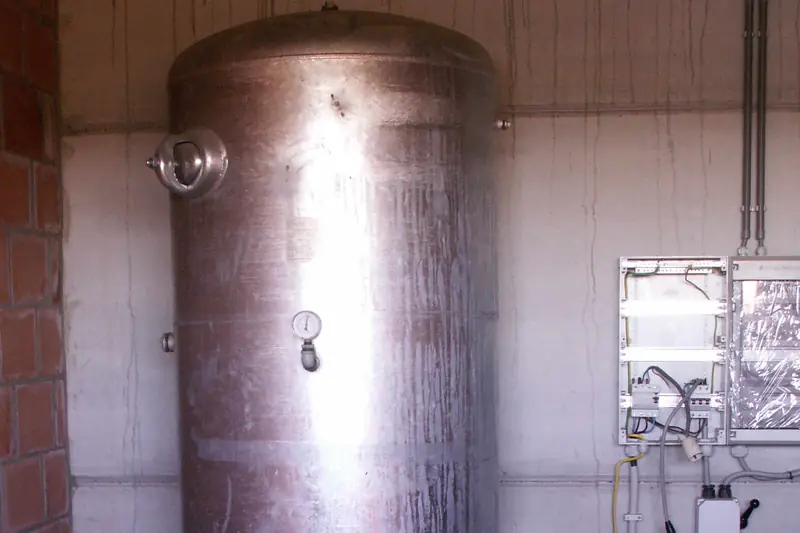
Does well water need a softener?
Only if hardness bothers you; hardness is a scale issue, not a safety one. Sacramento-area wells run from moderate to hard: Rio Linda/Elverta averages 99 mg/L (5.8 gpg) and Sacramento Suburban's south-area wells 130 mg/L (7.6 gpg), with single wells up to 280 mg/L.
Size with the same rule used across this site: gpg × people × roughly 75 gallons each per day (an assumption), aiming for about one regeneration a week. For four people at 130 mg/L (7.6 gpg) that is 7.6 × 4 × 75 ≈ 2,280 grains daily, roughly 16,000 a week, which a 32,000-grain unit covers. The arithmetic is on water softener sizing.
Well softeners are sized by pump flow as well as grains. SoftPro's ECO Well Water Softener (sold by SoftPro Water Systems, which shares Levee Line's owners) lists at $947–$2,977 and Quality Water Treatment's SoftPro Elite for well water at $1,327–$3,367 (listed prices in October 2026). No softener treats bacteria, nitrate, arsenic or chromium 6.
How are bacteria and nitrate treated?
Bacteria first get a shock chlorination and a retest; nitrate gets a point-of-use unit certified for it. Penn State Extension says shock chlorination suits one-time contamination, such as after pump work, and advises retesting for coliform 10 to 14 days later and again two to three months after. If bacteria return, "a continuous disinfection treatment system will be necessary", usually ultraviolet light or chlorination. Bypass softeners and filters during shock chlorination if their manuals say so.
UV units are certified under NSF/ANSI 55, and University of Georgia Extension notes they need clear water: sediment, iron, manganese and hardness all cut the light's effect. Nitrate is different. EPA WaterSense's November 2024 treatment-selection booklet says ordinary filtration "does not remove nitrates"; reverse osmosis, anion exchange or distillation can. The state booklet's advice above 10 mg/L as N is to treat or find another supply. A drinking-tap unit is the usual answer; see reverse osmosis in Sacramento.
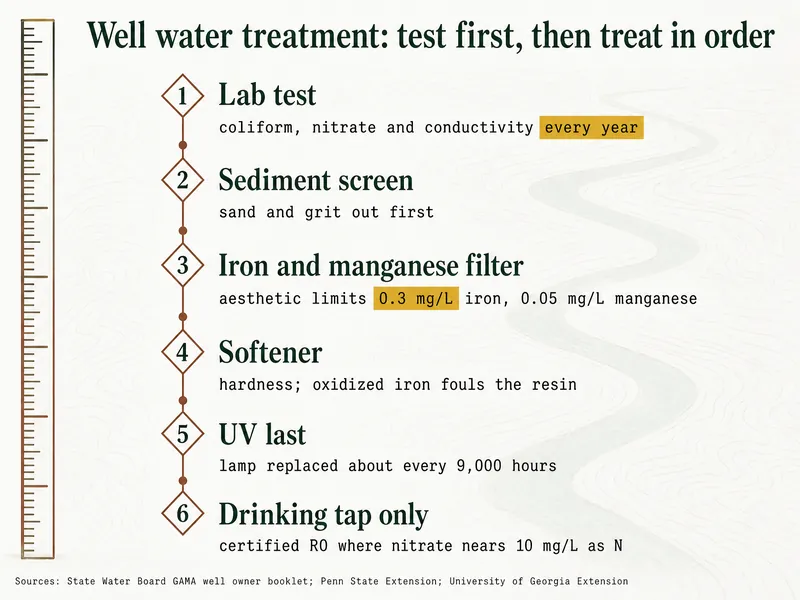
In what order do well water treatment stages go?
Sediment out first, then iron and manganese, then hardness, with UV last and any reverse osmosis at the kitchen tap. The logic comes from the sources: Penn State says oxidized iron fouls softener resin, so the iron stage goes ahead of the softener; University of Georgia says UV works best on clear, soft, iron-free water and is "often the last device in the treatment train."
Sand and grit go first because they wear valves and clog media. A spin-down separator is the simplest stage; both stores sell one with a 60-mesh screen, SoftPro's Spin-Down Sediment Filter (sold by SoftPro Water Systems, which shares Levee Line's owners) at $95–$117 and Quality Water Treatment's at $95–$165 (October 2026 listings). It removes sand and grit only.
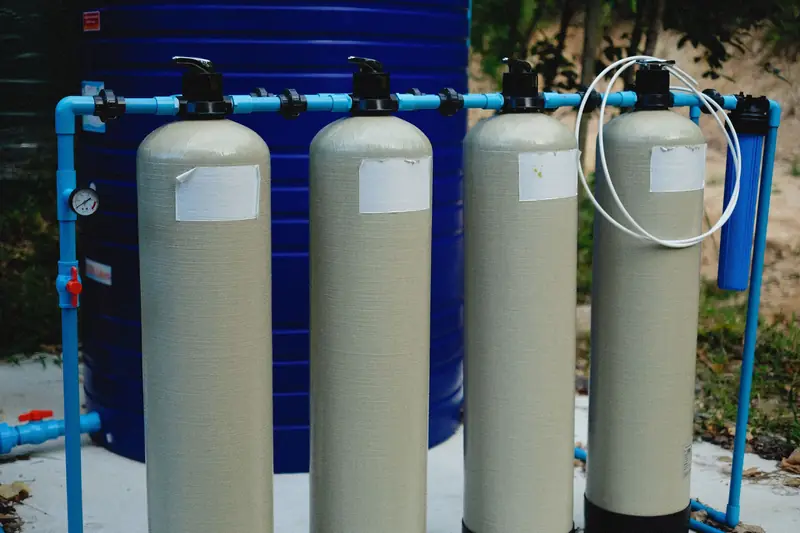
What does well water treatment cost to run?
The recurring costs are testing, salt, UV lamps and media, not the equipment alone. Annual coliform, nitrate and conductivity tests total roughly $65 to $170 at the state booklet's prices. A UV lamp is due about once a year of continuous use, per University of Georgia.
Salt follows from California's softener efficiency rule of at least 4,000 grains removed per pound: 16,000 grains a week works out to about 4 pounds of salt. Iron filters backwash on a schedule and their media wear out over years; follow the maker's manual. The state booklet's warning applies to all of it: "Improperly maintained systems can cause more damage than having no treatment at all." Retest after any new stage goes in to confirm it does what it should.
Sounding notes
Sources: the State Water Board's GAMA publication for domestic well owners, dated June 2025, and its well testing web page; Penn State Extension's articles on iron and manganese and on shock chlorination (updated May 2025); University of Georgia Extension's publication on disinfection methods; EPA's drinking water regulations table and WaterSense's November 2024 treatment-selection booklet; Sacramento County EMD's well program page; and 2025 reports from Rio Linda/Elverta, Carmichael and Sacramento Suburban for local groundwater context. All were read in October 2026. Store details are from listings in October 2026; claims such as "up to 30 ppm of iron" are the stores' own. Left out: installation prices and any water-use figures for backwashing, which vary by unit.
Downstream questions
Does Sacramento County require testing a private well?
The state leaves water quality in most household wells to the owner, and the county's role is permits for building and repairing wells. Testing every year is the owner's decision and the state's recommendation.
What causes a rotten-egg smell in well water?
Hydrogen sulfide. The state booklet lists oxidation, activated carbon, shock chlorination, ion exchange and ozone as possible treatments; a lab test confirms it.
Can one softener handle both iron and hardness?
Sometimes. Penn State says softeners can remove dissolved iron under about 5 mg/L if pH is above 6.7, but oxidized iron fouls the resin, so higher or oxidized iron needs its own stage.
Is UV enough for a well with coliform?
Only after the cause is fixed and the water is clear. UV kills bacteria passing the lamp but does not remove chemicals, and iron or hardness ahead of it cuts its output.
How often should I test after installing treatment?
Keep the yearly coliform, nitrate and conductivity tests, and add a retest after each new stage. Penn State's shock chlorination advice is a retest at 10 to 14 days and again at two to three months.
Does a whole-house filter remove arsenic?
Not unless a certifier lists that model for arsenic. Arsenic's limit is 10 µg/L; the state booklet says the right system depends on overall water chemistry.
Who installs well treatment equipment?
A licensed plumber or treatment contractor, with any permit the local building department requires. Keep a bypass around each stage so it can be serviced alone.
Further down the channel

Back upstream: every Sacramento-region tap water reading