Is Reverse Osmosis Worth It in Sacramento?
Reverse osmosis in Sacramento is rarely needed on soft river water, which the City of Sacramento's 2025 report puts at 205 mg/L dissolved solids, but it earns its place where a well report shows arsenic, nitrate or chromium 6.
Checked against its sources by Levee Line · how figures are sourced · Last checked
Ownership note: Levee Line shares its owners with SoftPro Water Systems and Quality Water Treatment, the two stores this page links to. Figures on this page come from Sacramento-area suppliers' own 2025 water quality reports, California and federal rules and certifiers' listings, read in October 2026. Anything a store says about its own product is reported as the store's claim. How store links work here
Readings first
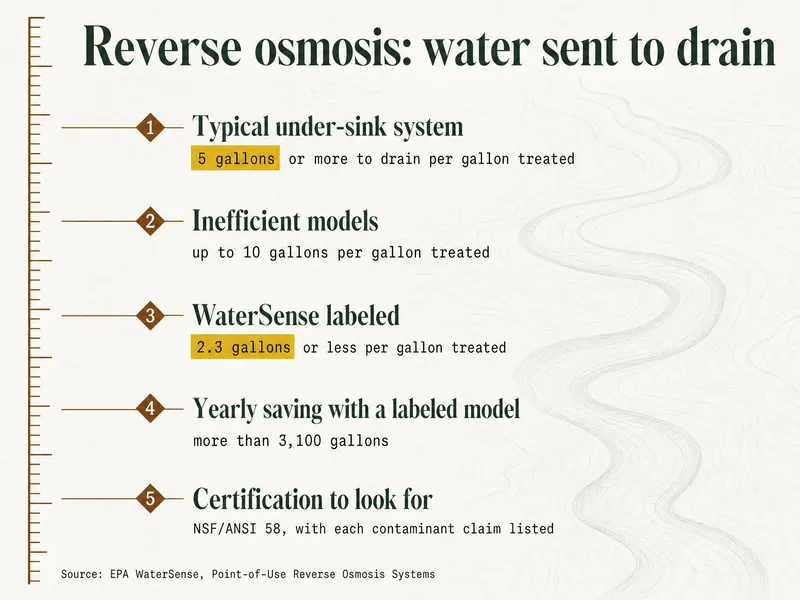
- A typical under-sink reverse osmosis unit sends 5 gallons or more to drain for every gallon it makes; WaterSense-labeled models must stay at 2.3 gallons or less (EPA WaterSense).
- NSF/ANSI 58 is the reverse osmosis standard, and a certificate lists each contaminant the model was tested to reduce.
- The City of Sacramento's 2025 report averages 205 mg/L total dissolved solids, far under the 1,000 mg/L secondary standard it prints.
- Rio Linda/Elverta's wells average 10.6 µg/L hexavalent chromium and 5.7 µg/L arsenic in its 2026 report on 2025 water.
- The Waterdrop G3P600 is certified by IAPMO R&T to NSF/ANSI 58 for lead, TDS, fluoride, cadmium, barium and radium; the G3-W holds a listing for hexavalent chromium and selenium but not lead.
- EPA says a labeled unit saves more than 3,100 gallons a year over a typical one.
What does reverse osmosis remove?
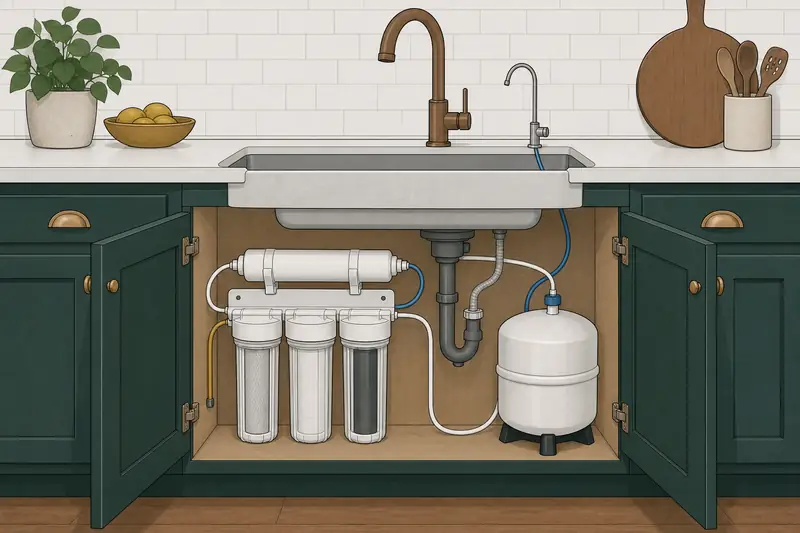
It removes most dissolved salts and metals by pushing water through a membrane, but only the contaminants on a model's certificate are proven. EPA WaterSense describes reverse osmosis as pressure forcing water through "a semi-permeable membrane", making a treated stream and a reject stream, and says such systems "can potentially remove" lead, volatile organic compounds, PFAS, arsenic, bacteria and viruses.
"Potentially" is the important word. EPA WaterSense's November 2024 treatment-selection booklet lists reverse osmosis under NSF/ANSI 58 and warns that no RO unit takes out every inorganic and organic contaminant and takes out calcium along with the rest. Most units also carry carbon stages, which is why a single system can hold NSF/ANSI 42 (taste and odor), 53 (health contaminants) and 58 certifications at once.
So read the certificate, not the box. Reports print results in ppm (mg/L), ppb (µg/L) and ppt (ng/L); match each contaminant in your supplier's report to a claim on the unit's performance data sheet.
Is reverse osmosis worth it on soft river water?
Usually not for safety, sometimes for taste. Suppliers drawing from the American River, Folsom Lake and the Sacramento River report low dissolved solids: the City of Sacramento averages 205 mg/L system-wide and its American River plant 47 mg/L in its 2025 report, San Juan Water District's treated water 31 mg/L and Folsom 57.75 mg/L. The City's lead tap samples came back at a 90th percentile of non-detect, 0 of 56 over the action level, in its last round (2023).
On water like that, reverse osmosis mostly changes taste and removes the fluoride the City adds (0.7 mg/L average in 2025). EPA WaterSense says it "does not intend to promote the installation of RO systems for all applications" and that a plain filter is sometimes enough. If chlorine taste is the complaint, start with carbon filters for chlorine taste; if you are on City water and worried about lead, lead in Sacramento tap water walks through testing first.
Is reverse osmosis worth it on groundwater?
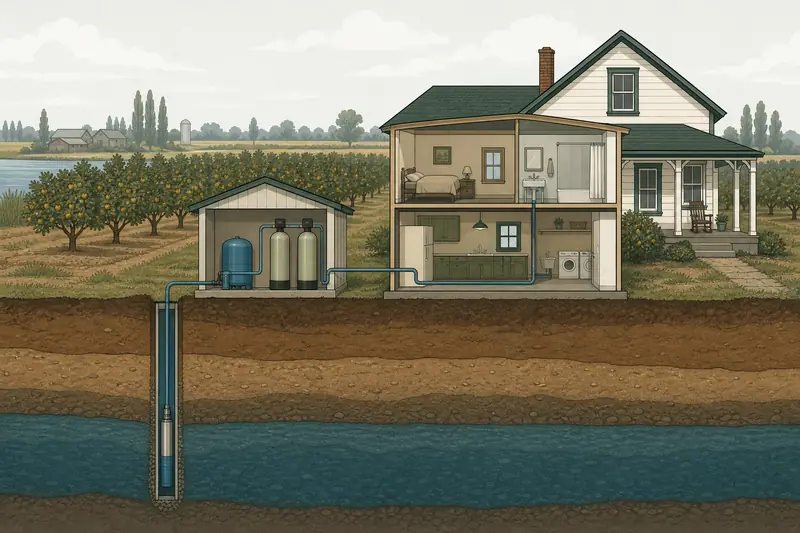
More often, because wells carry the contaminants reverse osmosis is certified for. Rio Linda/Elverta, which serves only well water, reports hexavalent chromium averaging 10.6 µg/L (4.2–18) against California's 10 µg/L limit and says it is not in violation until October 2027, with treatment in design. The same report shows arsenic from 3.4 to 10 µg/L.
Sacramento Suburban's wells report nitrate up to 6.6 mg/L as N in the north area in its 2025 report, under the 10 mg/L limit. On a private well there is no supplier report at all, so a lab test decides; EPA's comparison table notes ordinary filtration "does not remove nitrates", while it says some reverse osmosis units "can reduce nitrates". Testing steps are on private well testing in Sacramento County, and what a certified unit does for chromium 6 is on chromium 6 and PFAS.
Reverse osmosis by the numbers
- 5+ galReject water per gallon treated, typical under-sink unitEPA WaterSense
- 2.3 galMaximum reject per gallon for a WaterSense-labeled unitEPA WaterSense
- 205 mg/LCity of Sacramento total dissolved solids averageCity of Sacramento 2025 CCR
- 10.6 µg/LRio Linda/Elverta hexavalent chromium averageRLECWD 2026 CCR
What should a reverse osmosis certification say?
It should name the certifier, the standard and each contaminant, and the listing should be findable in that certifier's online directory. EPA WaterSense advises checking "the system's performance data sheet" or the certifier's website for the specific claim; IAPMO R&T keeps its product listing directory public.
Two units sold through the stores linked from this site show why the detail matters. SoftPro's Waterdrop G3P600 (sold by SoftPro Water Systems, which shares Levee Line's owners) ($429) is certified by IAPMO R&T to NSF/ANSI 58 (file WC-13976) for lead, TDS, fluoride, cadmium, barium and radium 226/228, and its carbon stage holds NSF/ANSI 53 for PFOA and PFOS (WC-14805). Quality Water Treatment's Waterdrop G3-W (sold by Quality Water Treatment, which shares Levee Line's owners) ($459) is listed under the same NSF/ANSI 58 file for TDS, fluoride, cadmium, hexavalent chromium and selenium, and is not certified for lead. Prices are each store's listed price in October 2026.
Neither listing covers arsenic or nitrate. The certifier for both is IAPMO R&T, not NSF International, whatever a product page says.
How much water does reverse osmosis send to drain?
Between 2.3 and 10 gallons for every gallon you drink, depending on the model. EPA WaterSense says a typical point-of-use unit makes "five gallons or more of reject water" per treated gallon, inefficient units up to 10, and labeled units 2.3 or less, which saves more than 3,100 gallons a year.
At a few gallons of drinking and cooking water a day, that reject water shows up on a metered bill. On City of Sacramento water, billed by the CCF (748 gallons), 3,100 gallons is a little over 4 CCF a year; the bill math is on Sacramento water bills and meters. Before buying, compare a listing's stated drain ratio with WaterSense's 2.3 benchmark, and treat percentage savings claims with care.
What upkeep does reverse osmosis need?
Cartridge changes on the maker's schedule and a membrane replacement every year or more. WaterSense's performance criteria require a labeled unit's membrane to last "at least one year before requiring replacement", and EPA's selection publication says unmaintained systems "may make water quality worse."
A cheap check is a handheld TDS meter: read the tap, then the reverse osmosis faucet. A healthy membrane drops the reading sharply; when the gap narrows, the membrane is due. Keep the cartridge dates on a label inside the cabinet, and have a licensed plumber or the installer confirm the drain connection has an air gap where local code calls for one.
Sounding notes
This page draws on EPA WaterSense's point-of-use reverse osmosis page and its November 2024 publication on selecting water treatment systems; annual 2025 reports from the City of Sacramento, San Juan Water District, Folsom and Sacramento Suburban Water District; and Rio Linda/Elverta's 2026 report on 2025 water. Certification details come from IAPMO R&T certificates WC-13976 and WC-14805, checked in October 2026; prices are store listings from the same month. Left out: water-savings percentages and health claims printed on product pages, and any arsenic or nitrate claim, because neither model's listing includes them.
Downstream questions
Does reverse osmosis remove fluoride from City of Sacramento water?
Both Waterdrop models above are certified for fluoride reduction under NSF/ANSI 58. With City fluoride at 0.7 mg/L on average, a certified unit takes out what the City puts in at that tap.
Is tankless reverse osmosis different from a tank system?
A tankless unit filters on demand instead of filling a storage tank. The certification question is the same: check the listing for each contaminant you care about.
Can reverse osmosis feed the whole house?
Point-of-entry reverse osmosis exists but wastes far more water; EPA notes that toilets and laundry do not need extra treatment. One drinking tap is the usual setup.
Does reverse osmosis water need remineralizing?
EPA's publication notes it removes calcium along with contaminants. Whether to add minerals back for taste is a preference; this site repeats no health claims about it.
How do I find a model's certificate?
Search the certifier's public directory by brand and model; for Waterdrop units, that is IAPMO R&T's product listing directory. The file number on the box should match.
Does reverse osmosis remove chlorine?
The carbon stages ahead of the membrane do. Look for an NSF/ANSI 42 claim for chlorine taste and odor on the listing.
Will reverse osmosis fix hard water spots?
Only at its own faucet. Spots on showers and fixtures come from the rest of the house water; see the hardness pages for that.
Further down the channel

Back upstream: Sacramento tap water, district by district